If a foreign friend asked me for one quiet walk in central Seoul—somewhere historical, easy to reach, and not built around shopping—this is the route I would show them.
It circles the outside of Deoksugung Palace, but the best parts are not the famous front gate. You pass a diplomatic compound, a 1938 house from the Japanese colonial period, a short palace path that the public could not use for 58 years, and finally a rooftop looking over old Seoul. The whole walk takes about 45–60 minutes without long stops, and the route itself is free.
The Walk at a Glance
- 📍 Start near City Hall Station, then follow the Deoksugung stone wall clockwise
- 🚍 City Hall Station (Lines 1 and 2), Exit 2 or 3
- ⏰ Allow 45–60 minutes; longer if a temporary exhibition is open
- 💡 Do this walk Tuesday–Sunday. The inner footpath and Cecil Maru are normally closed on Mondays
1. Start with Deoksugung’s Famous Stone Wall
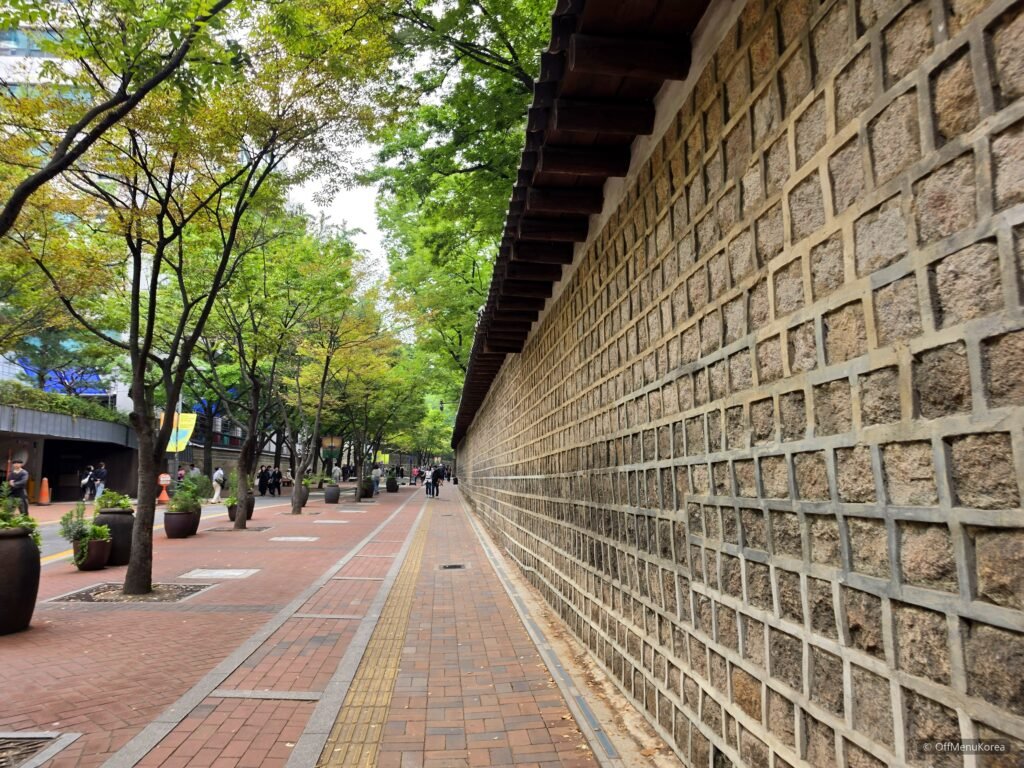
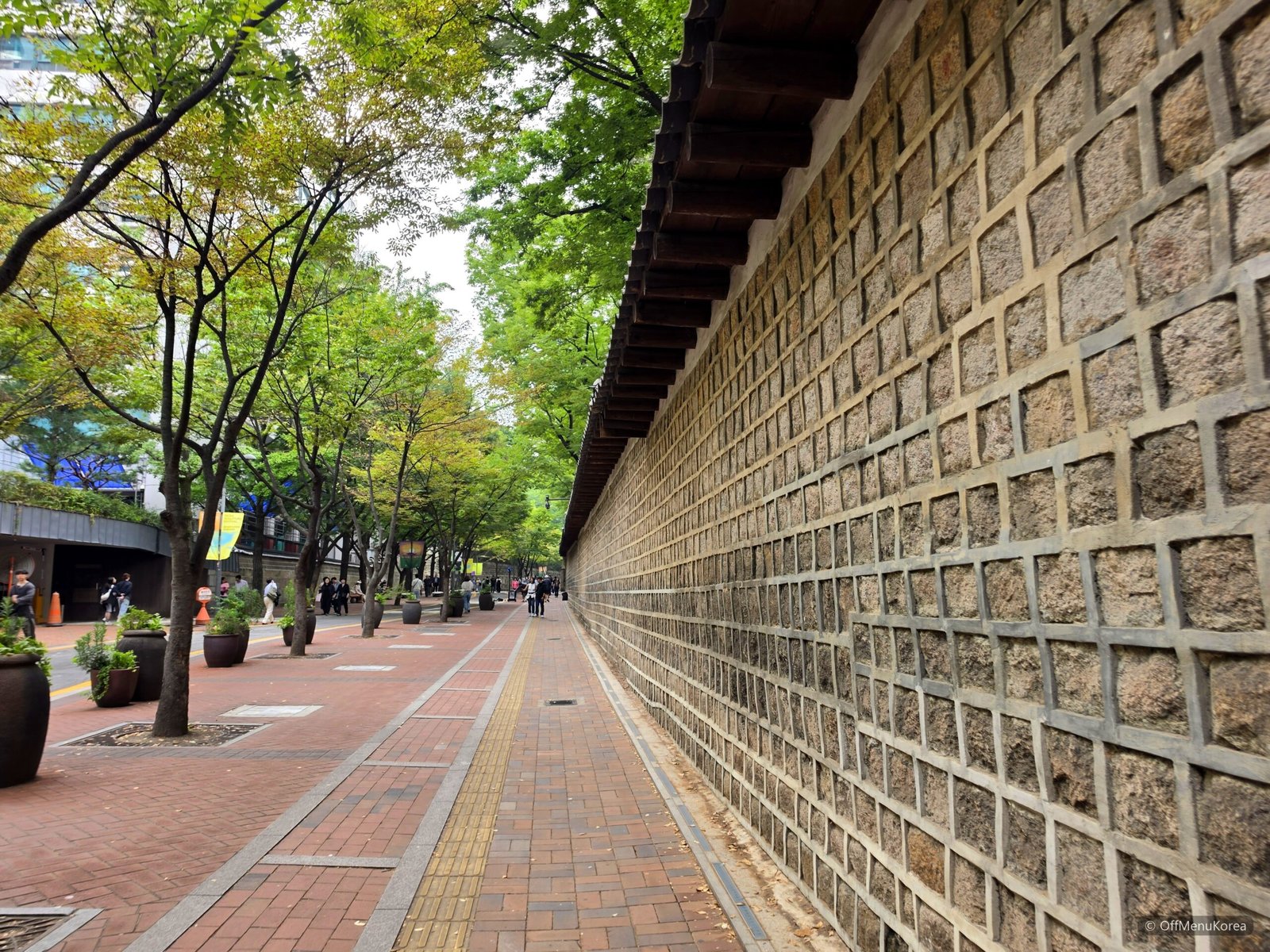
From City Hall Station, walk beside the long stone wall instead of going straight through Daehanmun, the palace’s main gate. Koreans know this as Deoksugung Doldam-gil—literally, “Deoksugung stone-wall road”—and it is one of Seoul’s classic walking streets.
The first stretch can be busy, especially on weekends. Stay with the wall as the crowds thin out; the atmosphere changes surprisingly quickly from downtown Seoul to a much quieter old neighborhood.
2. At the Small Rotary, Follow the U.S. Embassy Wall
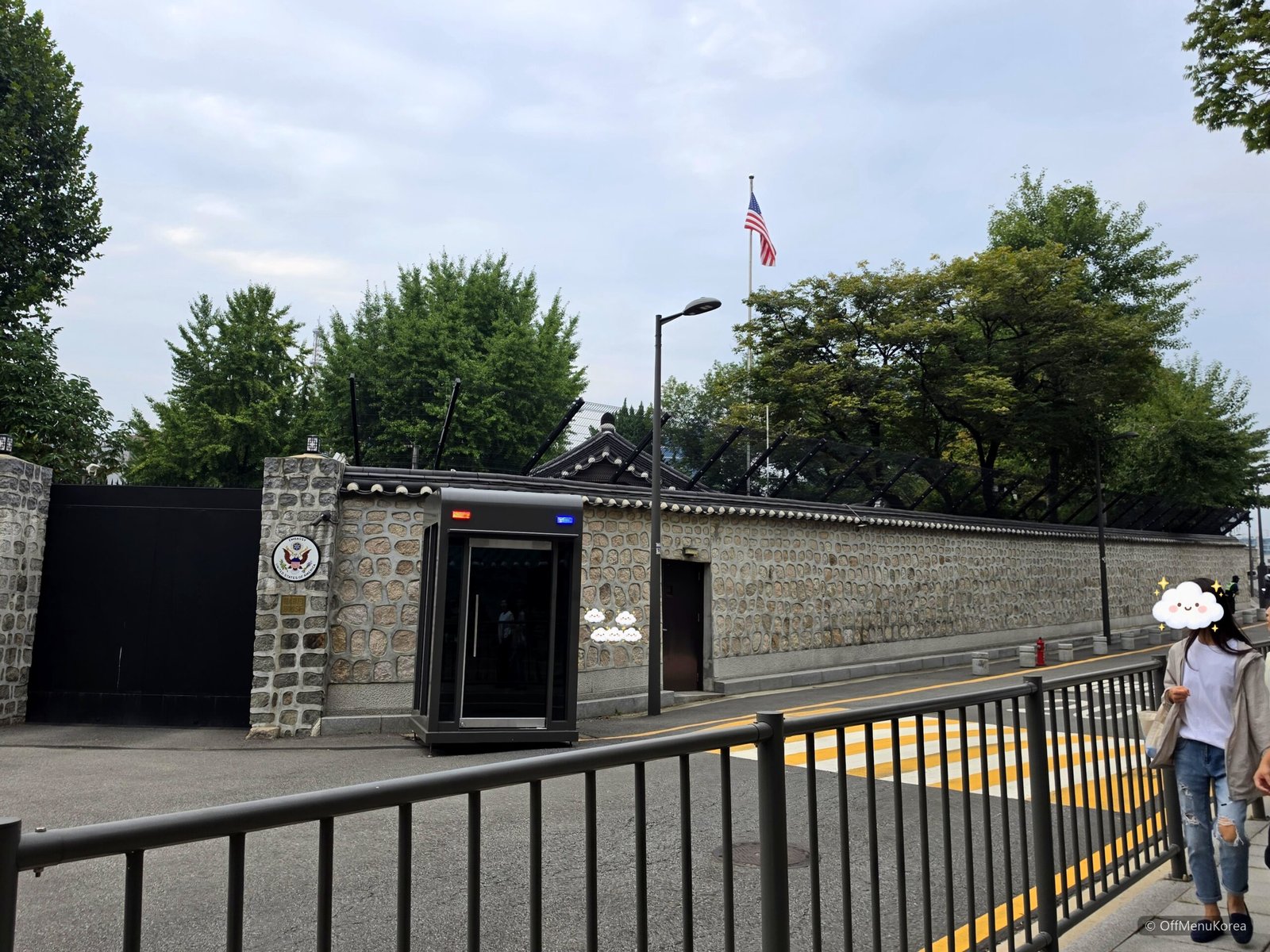
You will reach a small circular junction. Look for the stone wall, the American flag, and the U.S. Embassy residence compound; the public sidewalk continues uphill beside it.
There are guards and often police vehicles here, so first-time visitors sometimes wonder whether they are allowed to continue. You are—the sidewalk is a normal public route. Just be respectful around the security facilities and keep walking.
3. Make a Short Detour to the 1938 Director’s Residence
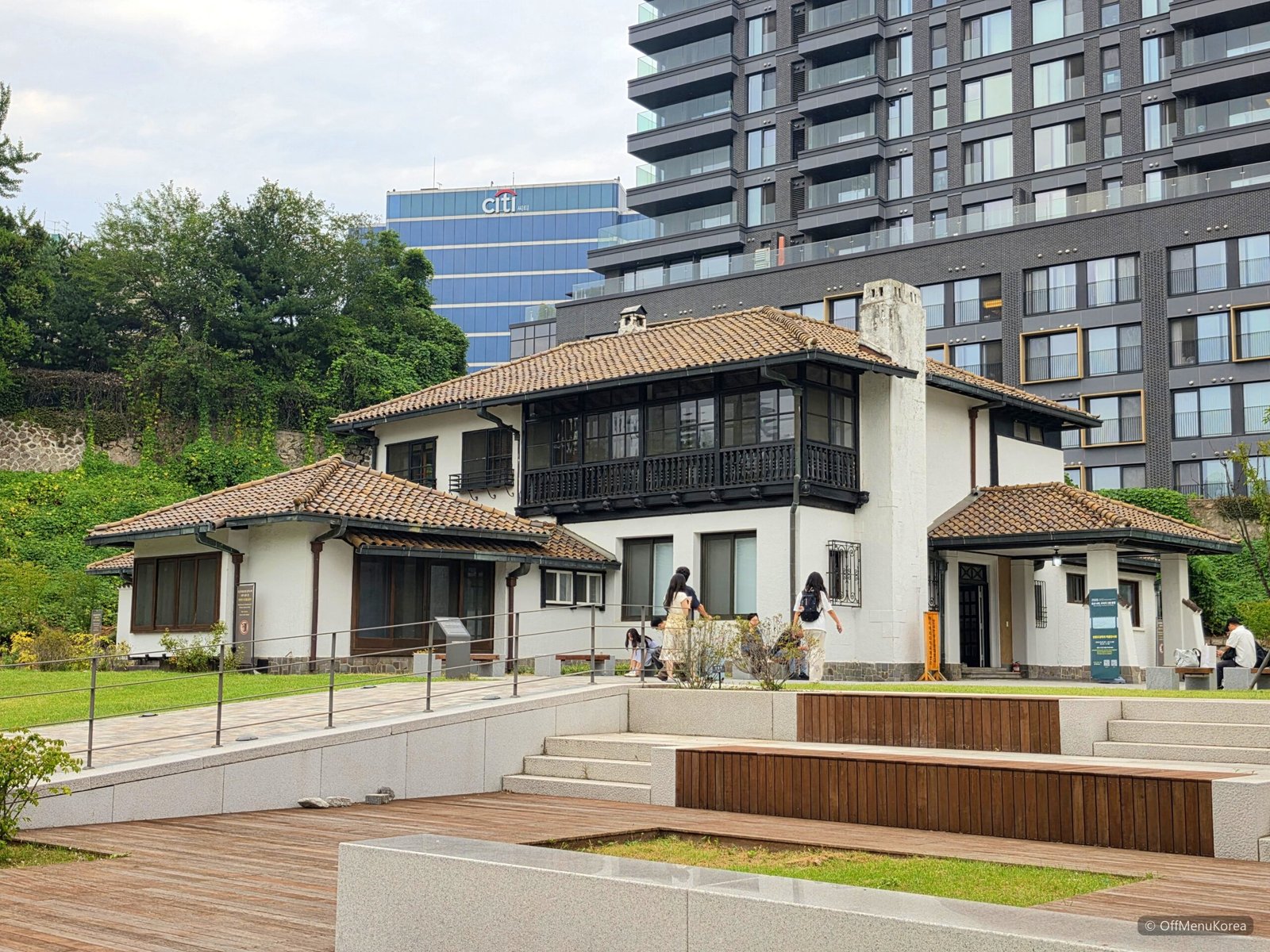
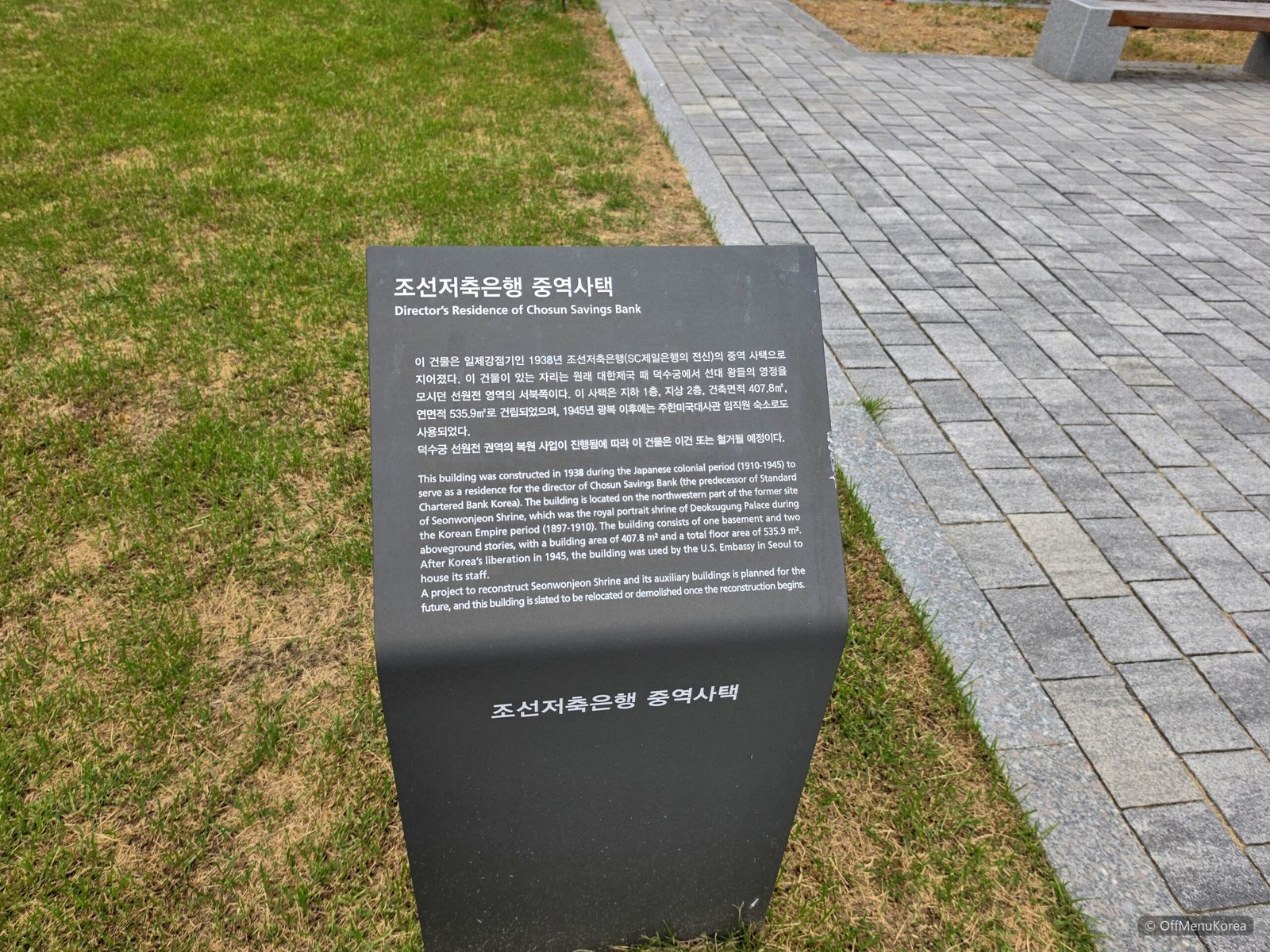
Near the northwest corner of the route, take the short side path to a cream-colored house with a tiled roof and a dark enclosed balcony. Its proper name is the Director’s Residence of Chosun Savings Bank (Joseon Jeochuk Eunhaeng Jungyeok Sataek).
The house was built in 1938, during the Japanese colonial period, for an executive of Chosun Savings Bank. After Korea’s liberation in 1945, it was also used as housing for U.S. Embassy staff—a compact building carrying several layers of modern Seoul history.
When I visited, university students were holding an exhibition inside, so I could see the timber interior, models, and traditional craft pieces. That was a temporary event, not a permanent museum display—if the door is closed on your visit, you can still see the exterior and continue the loop.
Local Note: The 1938 Residence
- 🏠 Built in 1938; later used as housing for U.S. Embassy staff
- ⏰ The exterior is visible from the route; interior access depends on temporary exhibitions
- 💡 Recent special openings have typically run around 09:30–17:00 and closed Mondays, but always check the notice at the entrance
4. Use the Salvation Army Building as Your Landmark
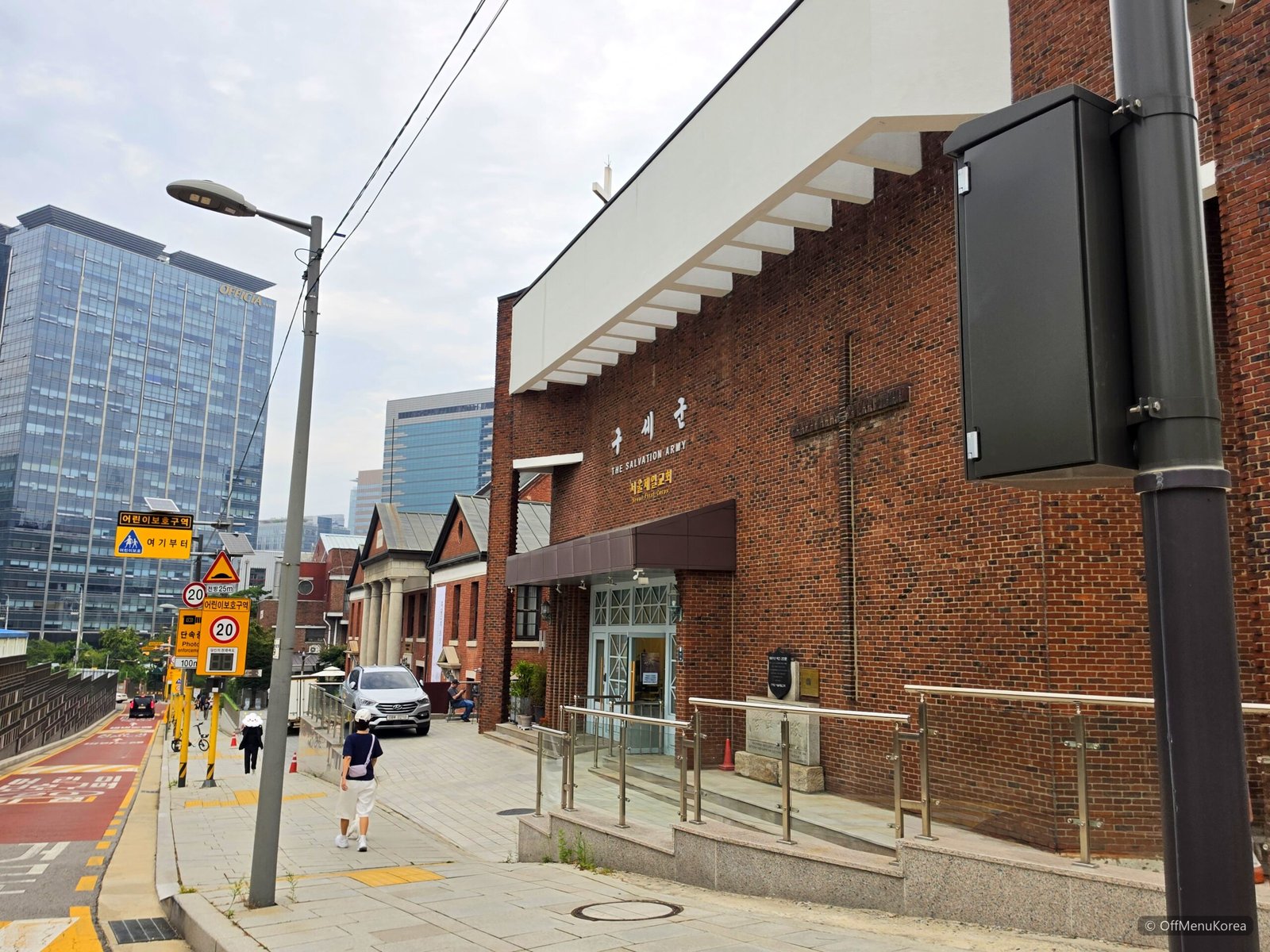
Return to the main route and look for the red-brick Salvation Army building. It is a useful visual marker: keep it on your side as the road leads you toward the less familiar back edge of Deoksugung.
This part of Jeongdong is a good example of why I like the neighborhood. A palace wall, diplomatic buildings, early modern brick architecture, and ordinary Seoul traffic all sit within a few minutes of one another.
5. Walk the 100 Meters That Stayed Closed for 58 Years
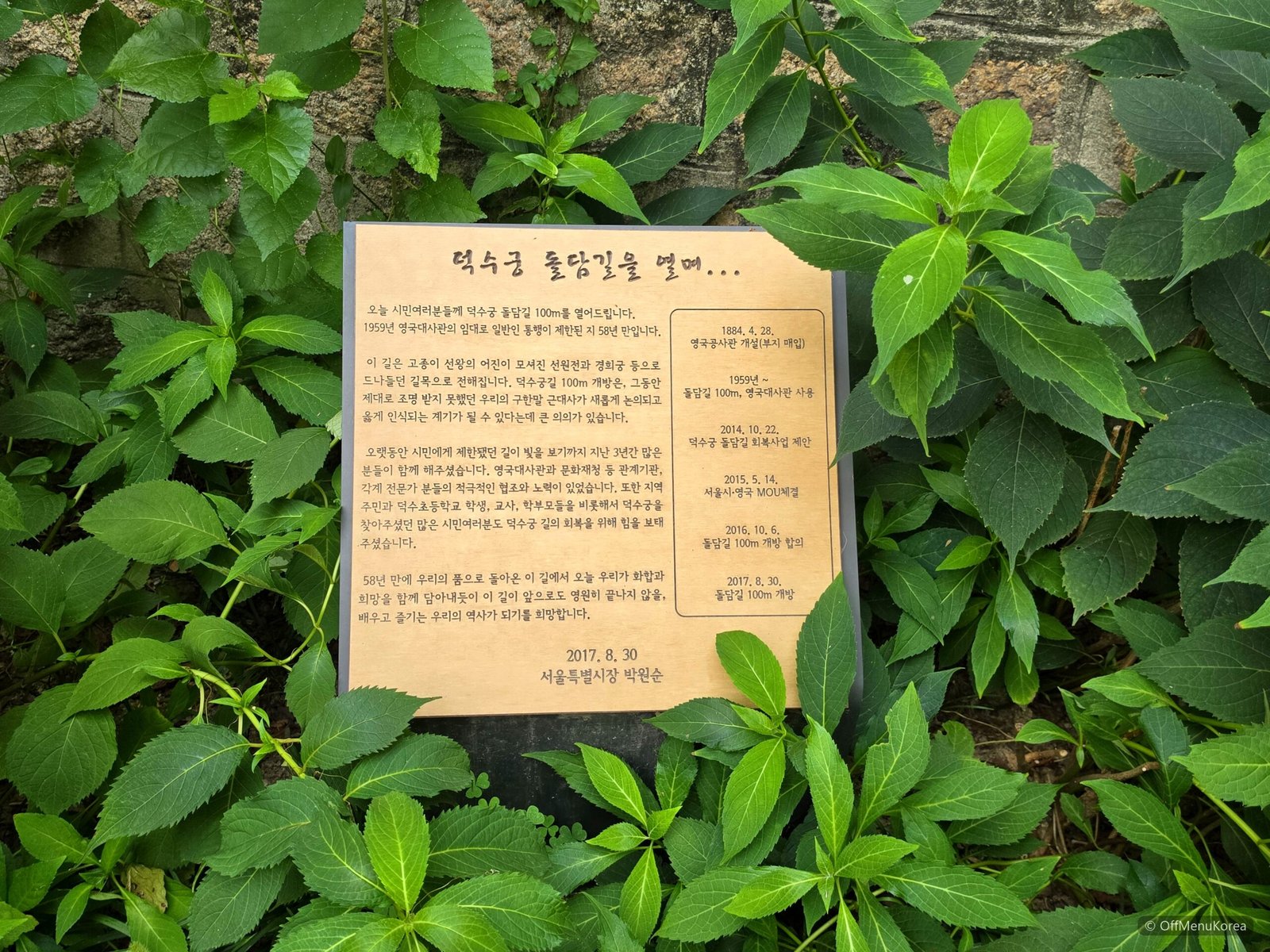
The most interesting part of the loop is only about 100 meters long. The land beside the wall was leased to the British Embassy in 1959, which cut this section off from public access. Seoul and the United Kingdom later agreed to restore the route, and it finally reopened on August 30, 2017.
The plaque also connects the path to the former Seonwonjeon shrine area and the routes used around Emperor Gojong’s palace. It is a small space, but it makes the complicated geography of late-Joseon and modern Seoul much easier to feel.
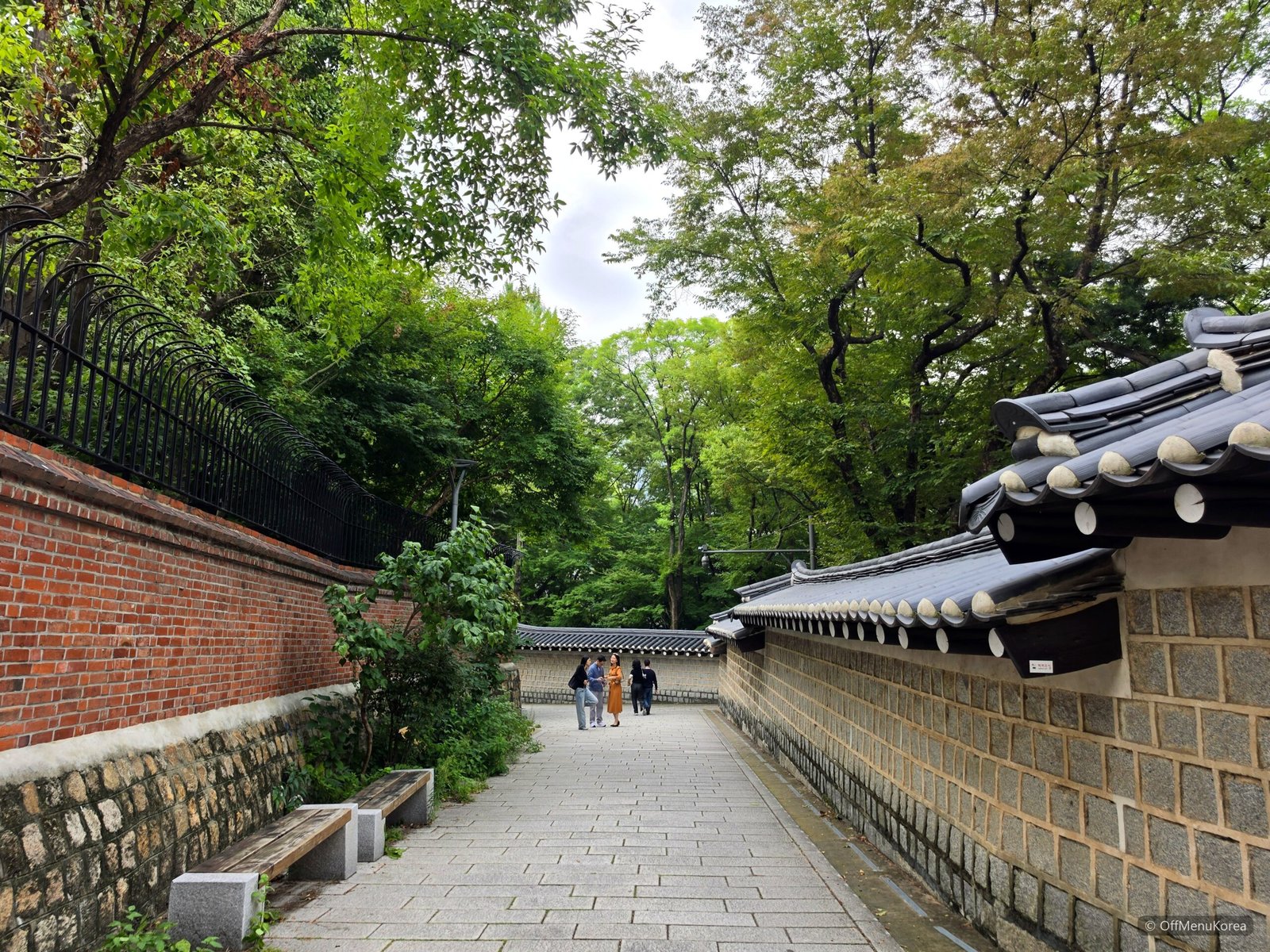
Opening Hours: Deoksugung Inner Footpath
- 🕘 No food, smoking, pets, bicycles, inline skates, or ball games
- ⏰ 09:00–17:30, Tuesday–Sunday; closed Mondays
- 💡 If a public or substitute holiday falls on Monday, the path may open that day and close on the next non-holiday instead
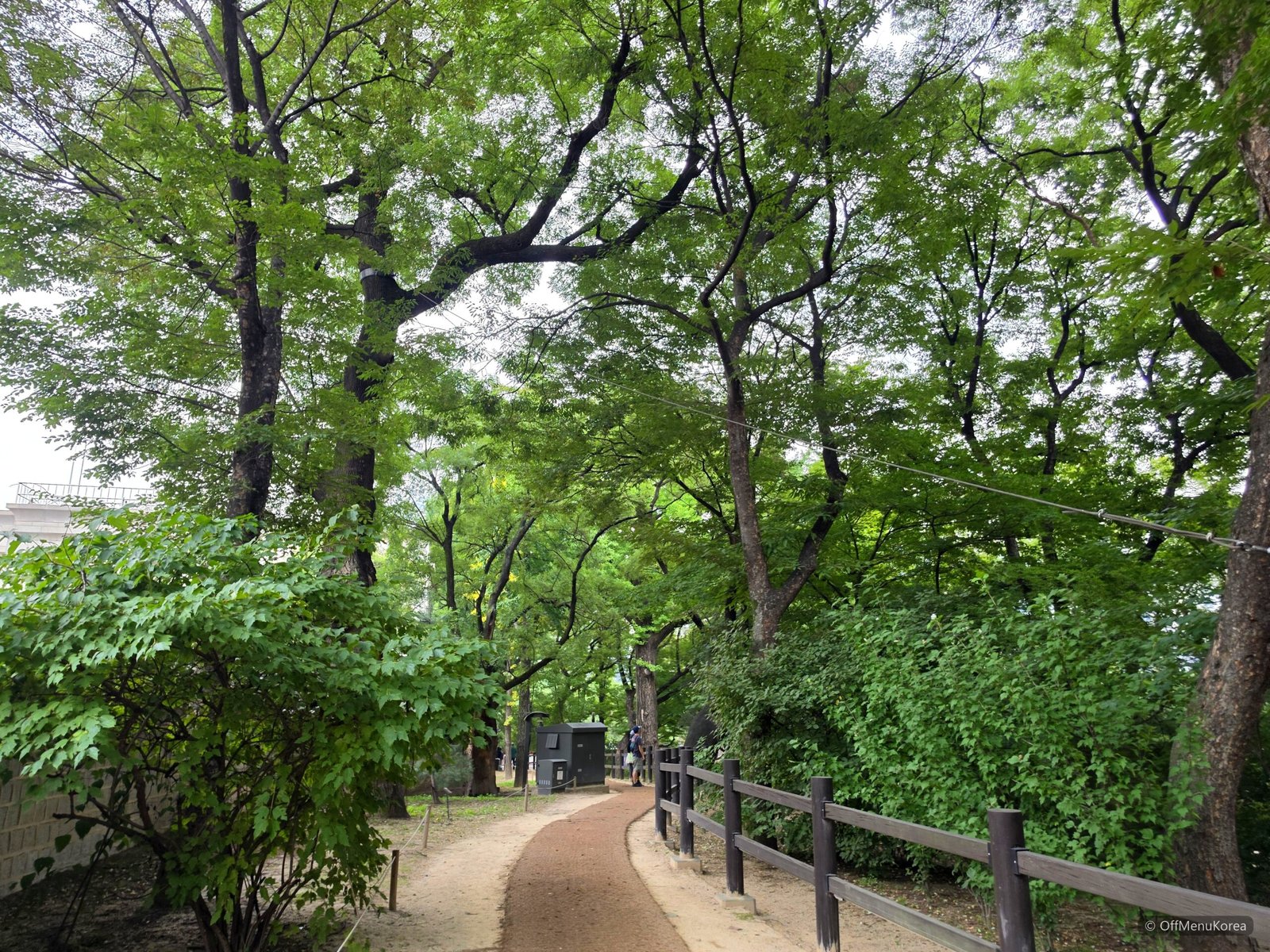
Once through the gate, the ground becomes softer and old trees lean over the path. It is not a grand palace avenue; it feels more like borrowing a quiet edge of the palace grounds for a few minutes.
6. Finish Above the City at Cecil Maru
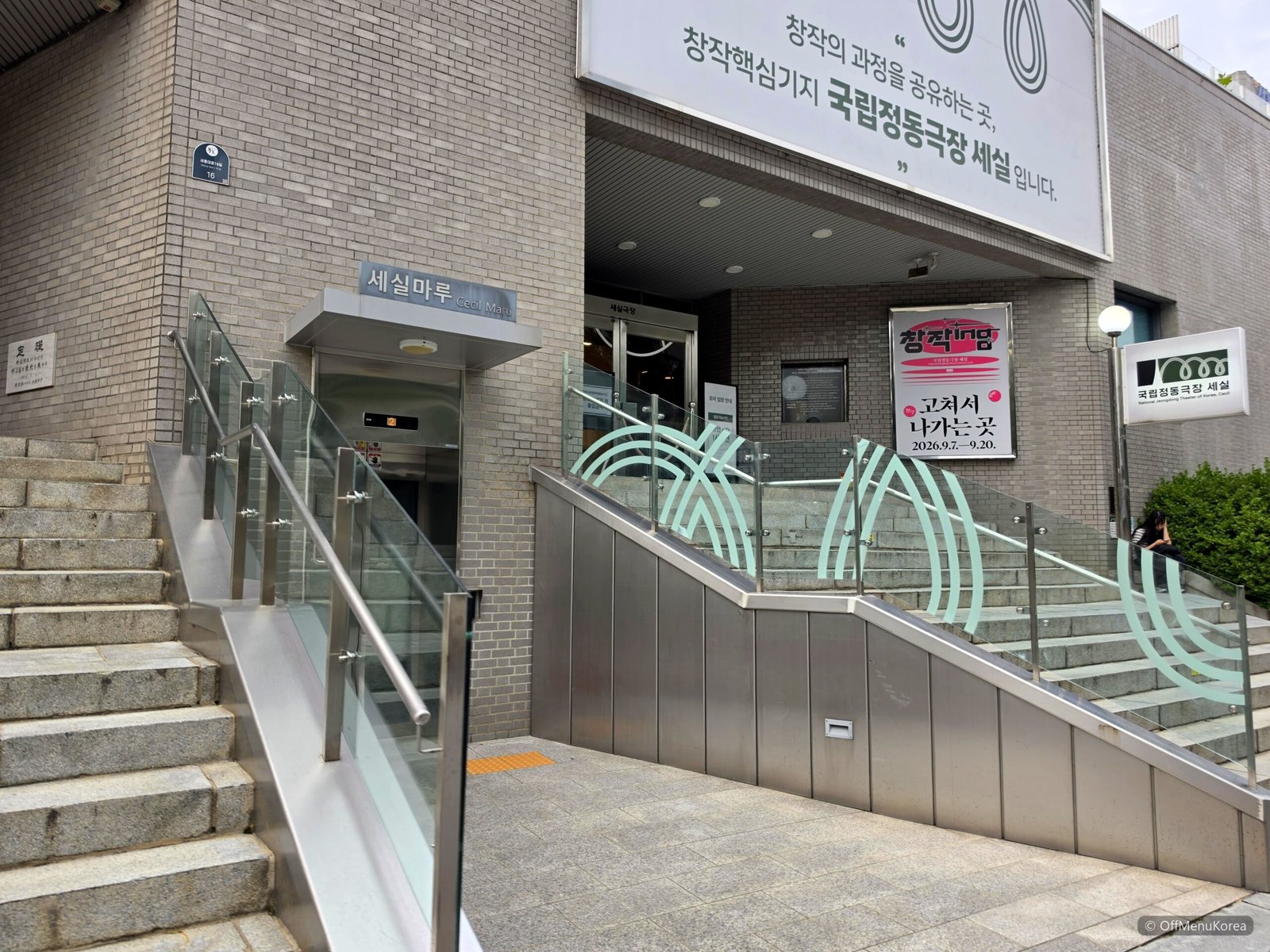
After leaving the inner path, follow the signs to the National Jeongdong Theater, Cecil. The small elevator marked Cecil Maru takes you to the rooftop garden, so you do not need to climb the outdoor stairs.
The approach to Cecil Maru includes a gently sloped accessible path, and the elevator continues up to the rooftop. Wheelchair users, older visitors, and families bringing babies or toddlers in strollers can reach the terrace comfortably.
Maru can mean a raised wooden floor or an elevated place in Korean. Here, the name fits: the rooftop is a public terrace where you can pause above the old streets of Jeongdong.
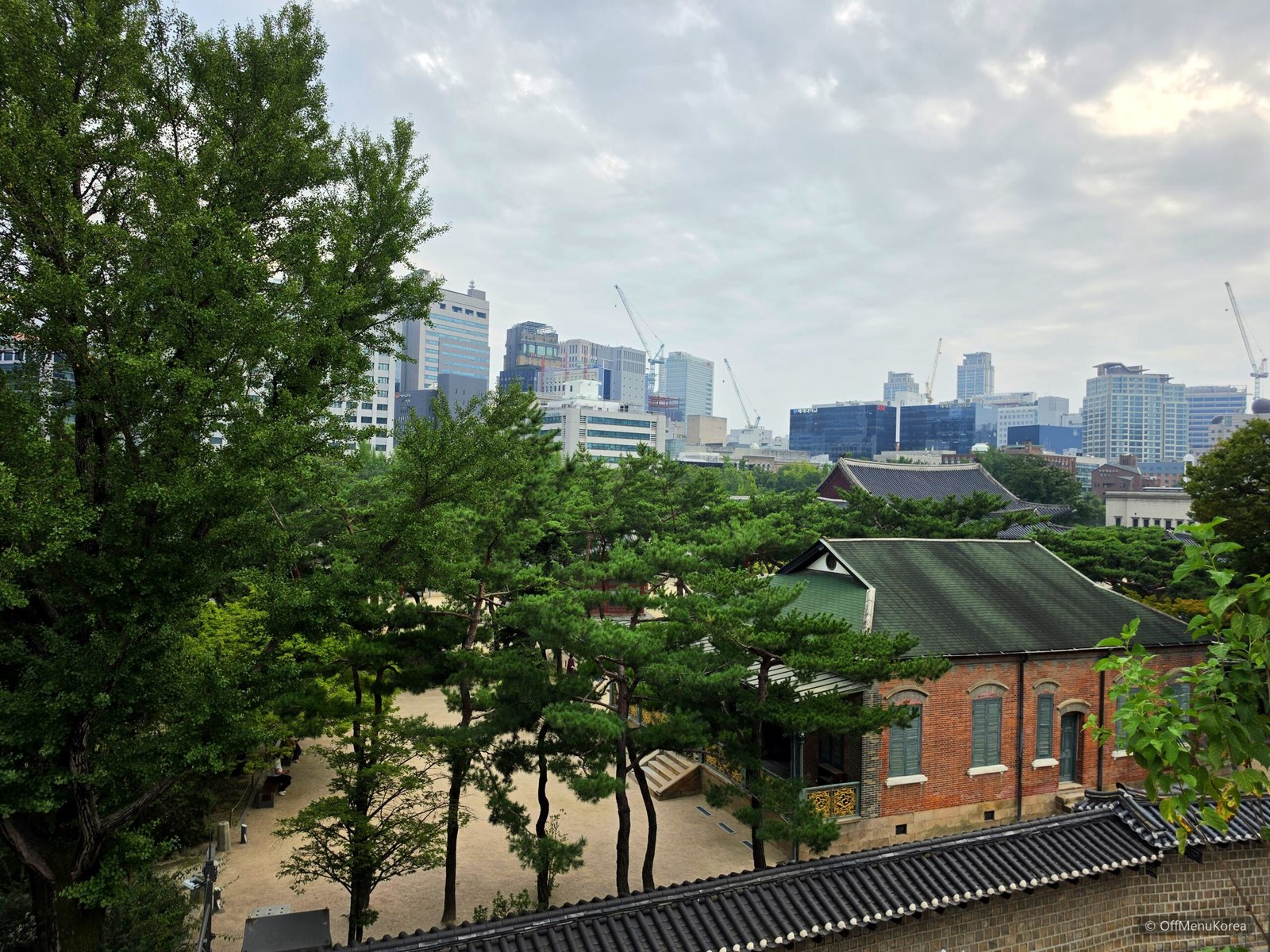
The view explains the neighborhood better than any map. Below you are Deoksugung’s tiled roofs and greenery; around them are office towers, cranes, and the rest of central Seoul. Old and new are not separated here—they are almost stacked on top of each other.
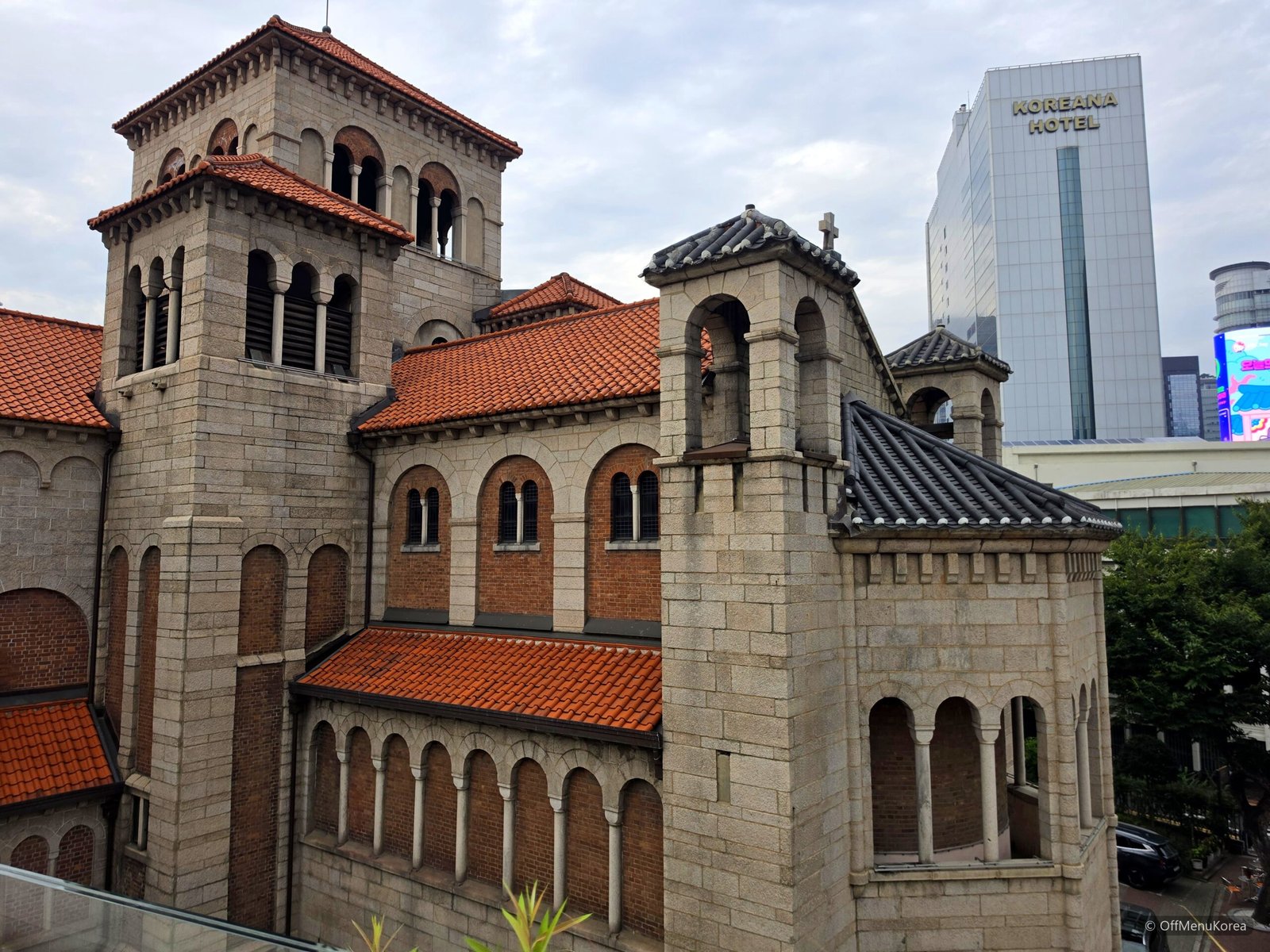
Right beside the terrace is the Anglican Cathedral of Seoul, completed in stages and known for its Romanesque stone-and-brick design. Seeing its orange roof tiles and bell towers against the modern hotels is my favorite ending to this walk.
Opening Hours: Cecil Maru
- 📍 Rooftop of National Jeongdong Theater, Cecil, 16 Sejong-daero 19-gil
- 🌇 Accessible path and elevator access for wheelchairs and strollers
- ⏰ Usually 09:00–21:00, Tuesday–Sunday; closed Mondays
- 💡 Admission is free; hours can change for events, weather, or seasonal operations
The Route I Walked
Start at City Hall, keep the palace wall beside you, make the short detour to the 1938 residence, and finish on Cecil Maru. The map below follows my actual walking direction.
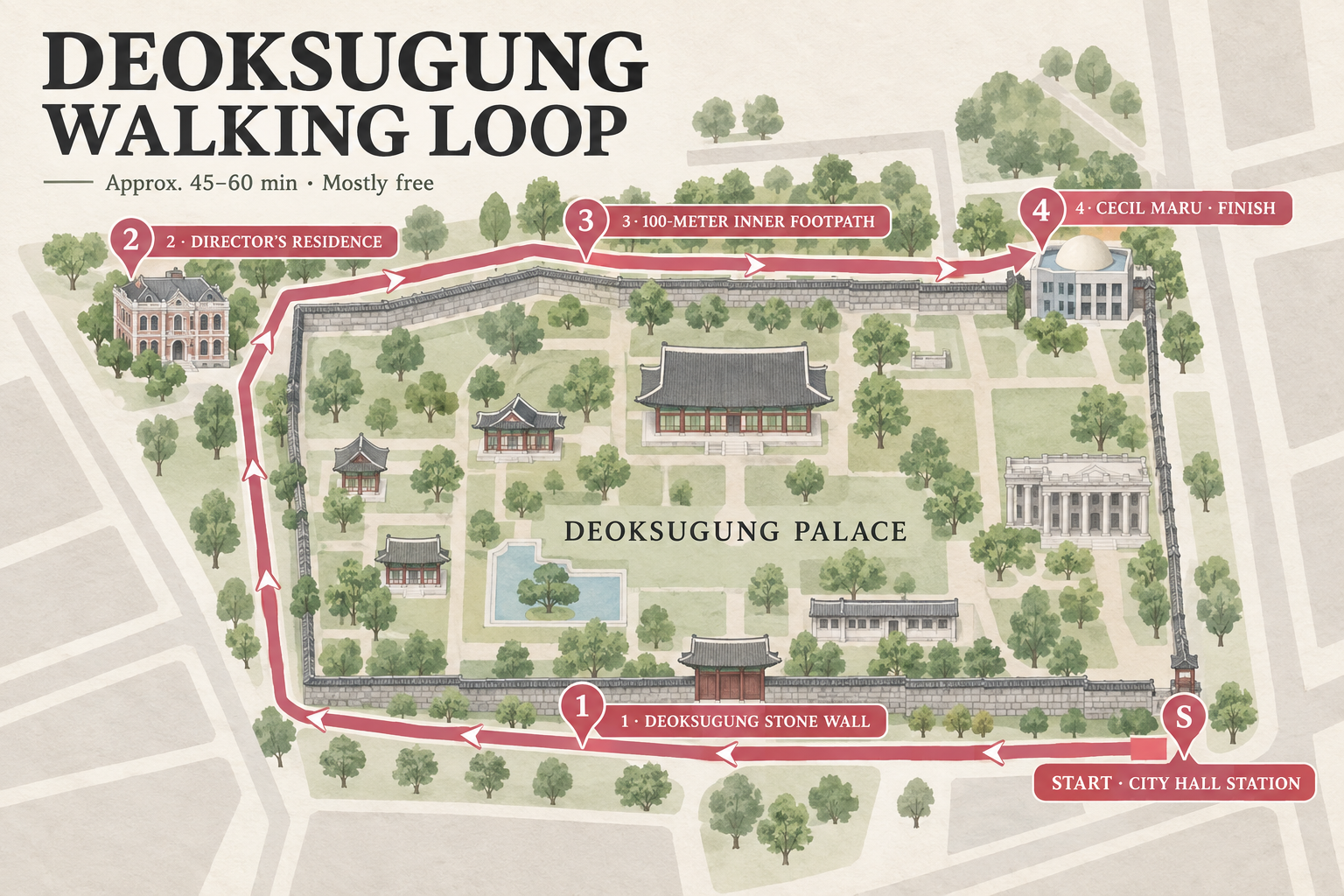
If you also want to enter Deoksugung itself, the main palace is normally open 09:00–21:00 with last admission at 20:00 and is closed on Mondays. The outside loop described here does not require a palace ticket.
Hours checked in September 2026. Seoul venues sometimes adjust access for holidays, performances, maintenance, or weather, so check the notice at each entrance on the day you visit.
Would I come back?
Yes—this is one of my favorite free walks for showing a visiting friend how many layers of Seoul can fit into a single hour.
Good for
- First-time visitors staying near City Hall or Myeongdong
- Architecture and modern-history fans
- Travelers who want a calm, low-cost afternoon
- Photographers who like old-and-new city views
Skip if
- Monday visitors, when the two key access points are normally closed
- Anyone who needs a completely flat, step-free route from start to finish
- Heavy-rain days, since most of the walk is outdoors